
Study guides
George Orwell isn’t an easy author to read. His style is heavy, concepts are multidimensional and characters are oftentimes disgusting. You’d never have though that the boy attended the most prestigious schools in the UK – his writing screams anarchy and oppression. Having lived among the most poor of London and served as a policeman in Burma, all of Orwell’s works are...
Charles Dickens wrote “A Christmas Carol” in 1843 and it has become a legendary scenario for numerous cartoons, movies and theater plays. It’s hard to imagine it now that the story was written at a period when Britain was just discovering its Christmas traditions of decorating a tree, singing carols and cooking turkey. Ebenezer Scrooge is a mean old man who is stingy with money...
Anthony Burgess published “A Clockwork Orange” in 1962 and his work was later adapted into a legendary Stanley Kubrick movie. The movie was actually made based on a shortened version of the book, so it’s definitely worth discovering the full story even if you’ve already seen it in pictures. Youth violence, teenage rebellions and different subculture variations dominate...
This novel written by Mark Twain is sometimes called the “Don Quixote vice versa”. This comparison indeed has something in it. The engineer from the Mark Twain’s time, Hank Morgan, is somehow transported to the times of King Arthur. But unlike Don Quixote, the last knight errant, Morgan considers himself the only pragmatic man in the land of hopeless romantics. He immediately...
There exist play writers that represent the best personification of theatre. Henrik Ibsen is one of them. In his 1879 play “A Doll’s House”, he managed to combine mastery of realism, the suspense of events, depth of colorful characters and beauty of words. There are a lot of words said about the lack of opportunities smart and talented women had in the 19th century. “A...
“A Farewell to Arms” is a book written by Ernest Hemingway about the events of the World War I. This is the book that presented Hemingway to the world as a writer. It is a high-quality text about war, love, cynic actions and “lost generation”. Prepare to dive into a world that is ripped apart, makes no sense and smells like cognac. The protagonist of the story is...
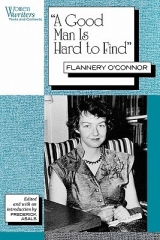
Flannery O’Connor is a good example of a writer who didn’t just accidently “stumbled” into this profession. She was working the writing and editing jobs since her childhood and even got a master scholarship because of her talent. It was at a young age of twenty-one that O’Connor published her first novel. Proud owner of numerous awards, among which National Book...
“A Lesson Before Dying” is a fictional novel written by Ernest Gaines. The book was nominated for numerous well-respected prizes and awards. It talks about a man who is sentenced to death for the crime he didn't commit. The author was born in Louisiana during the Depression times. He himself was involved with manual labor since early ages and then moved to California, where he...
A Long Way Gone by Ishmael Beah is a heartbreaking story of a boy soldier of an African country. What makes reading more painful is the knowledge that it is actually an autobiography: Ishmael was a combatant during a civil war in Sierra Leone. We see how traumatizing war can be for the minors and how awfully fast they adjust to its realities, becoming soldiers who enjoy killing and torturing...
“A Man for all Seasons” is a play written by an English playwright Robert Bolt. The historical drama of the highest emotional tension tells about great English humanist Thomas More, a statesman, an outstanding lawyer, and philosopher, who gave life for his convictions. History of Thomas More perhaps the most famous and memorable episode of the relationship between humanist and...
“A Midsummer Night’s Dream” is a great summery comedy written by William Shakespeare in 1596. The text reads quite differently from typical author’s creations. It is very light and airy-fairy to the point that it’s hard to tell where is the reality and where is a dream. Get ready, put on your fancy clothes, turn on the music – we are going to the wedding! The...
In 1729 Jonathan Swift published his work that carried an immensely long title but has become known under “A Modest Proposal” name. The book is a major social text exploring the living conditions in Ireland and the attitude towards the Irish from other nationalities. Today it’s hard to imagine a situation in which a parent would sell his kid, but this concept is exactly what...
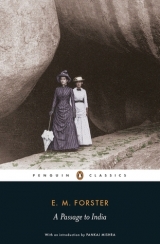
A Passage to India is a fiction novel by E. M. Forster that shows us the relationships between English and Indian people during the time of the British colonization. The main hero of the story is an Indian Muslim Aziz, who tries to be as open to the English people as possible, as long as they respect him and his traditions. But in the end, he falls victim of the bigoted attitude that always sees...
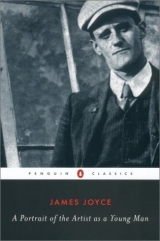
In writing his novel “A Portrait of the Artist as a Young Man”, James Joyce, one of the greatest masters of the thread of consciousness style in literature, managed to combine a political discourse with a fascinating plot. Together with the moments of epiphany, the book takes unexpected turns and will make for a very exciting reading. The events of the book are intermingled with...
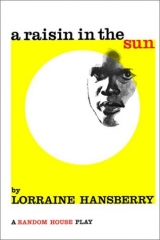
“A Raisin in the Sun” is a play written by an American writer Lorraine Hansberry. She was born into a family of well-educated African Americans, who were active and successful examples of those who fought racial discrimination and segregation. These events found their reflection in Lorraine’s writing. If today talking about tolerance and movement for racial equality has...
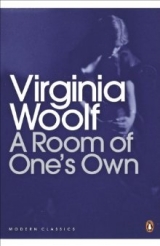
Virginia Woolf was an English writer and literary critic. She was the leading figure of the modernist literature of the first half of the 20th century. Her works became the classics of the “flow of consciousness.” And her essay “A Room of One's Own” became the classics of feminist critics. The essay is based on two reports called “Women and Fiction” that...
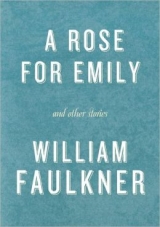
“A Rose for Emily” is one of the most quotable and well-known works of William Faulkner. It is centered on author’s favorite topic – change, strangeness, openness, and flexibility. Even though some might find other meanings in it and they will be right. Located in a fictional city, the story can be summarized as a gothic plot about courage and patience. The events happen...
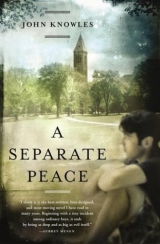
John Knowles wrote “A Separate Peace” in 1959. It is a story about many stories. There’s a little bit of war, patriotism, growing up difficulties, morals, and breaking the rules in the text. If one had to summarize the book in one sentence it would be a novel about a challenging process of growing up being locked up in a foster home with a shadow of World War II on its...
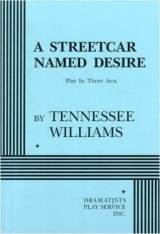
Prepare to discover the jewel of American literature impersonated in a play of Tennessee Williams. “A Streetcar Named Desire” is about a confrontation of two or even three different modes of life that happen to be close by but are so far away from each other at the same time. Some might say that the play is a sad but very common life story. That is why the book leaves the biggest...
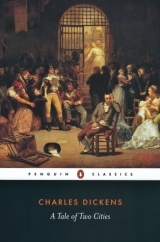
“A Tale of Two Cities” was published in Charles Dickens’ own magazine in 1859. He gained inspiration for the plot from another play he participated in as an actor at the time of writing. The book also has a right to be called historical, since the author referred to the French Revolution survivals while collecting the facts for the text. The events take place in the 18th century...